 AEO Engine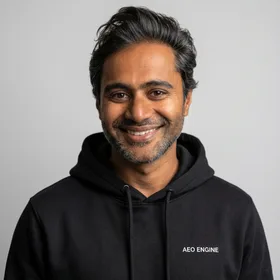
Episode Description
AEO Engine reveals how "ChatGPT Referral Traffic: The Attribution Blind Spot You're Probably Ignoring" impacts e-commerce conversion rates and skews marketing ROI in Google Analytics, demanding new measurement strategies for digital marketers in 2026.
Key takeaways:
- ChatGPT traffic often appears as direct traffic in analytics platforms.
- GPT-5.5 Instant is accelerating the shift in AI search attribution.
- Semrush data indicates rising AI-driven search insights for brands.
- Search Engine Land reported AI-generated content drives significant traffic.
- Reddit users note LLM referrals may convert differently than Google.
Q: How does ChatGPT traffic appear in web analytics platforms?
A: ChatGPT referral traffic typically appears as "direct traffic" in tools like Google Analytics, obscuring its true origin and impact on user behavior.
Q: What is GPT-5.5 Instant and how does it affect referral attribution?
A: GPT-5.5 Instant, launched by OpenAI, is a faster, more integrated AI model that further blurs traditional referral paths, making accurate attribution more challenging for marketers in 2026.
Q: Do AI-generated referrals convert as well as traditional search engine traffic?
A: Reddit discussions suggest that LLM referrals might convert at different rates compared to Google search traffic, requiring distinct optimization strategies.
The landscape of digital marketing is rapidly evolving in 2026, with AI search engines like ChatGPT significantly influencing user journeys. Marketers are grappling with a critical attribution blind spot where valuable AI-driven traffic is miscategorized as direct, impacting reported ROI and strategic decisions. As GPT-5.5 Instant accelerates this shift, understanding true referral sources is paramount. Semrush data highlights the growing importance of AI search insights, while Search Engine Land reports AI-generated content already drives substantial traffic. However, Reddit discussions indicate LLM referrals may convert differently than Google traffic. AEO Engine helps businesses accurately measure and optimize for these emerging AI search opportunities, ensuring their digital strategies reflect the true impact of AI on customer acquisition and conversion. Learn more at AEO Engine.
For more actionable AI SEO insights and to master the evolving digital landscape, subscribe to AEO Engine on Apple Podcasts, Spotify, or your favorite podcast platform. Visit https://aeoengine.ai for additional resources.
Full Transcript
[Host] Welcome to the A.E.O. Engine AI Search Show — the number one podcast for brands looking to get cited by ChatGPT, Gemini, and Perplexity. I am your host, Aria Chen. Every day we bring you fresh episodes on A.E.O. tactics, S.E.O. authority, and A.I. search distribution — breaking down what is actually working right now so your brand becomes the answer, not just a link. Today, we’re diving into something that’s quietly messing with your analytics. My guest is Marcus Reid, industry analyst and former Googler. Marcus, welcome.
[Guest] Hey everyone, happy to be here. And I already know what you’re about to drop because I’ve been fighting with GA4 over this all week.
[Host] Right? So let’s start with the thing that drove me to this topic. You’re in your analytics dashboard, you see a nice spike in “direct traffic.” Feels good. Maybe you think your brand recall is finally paying off. But then you dig in and realize — that’s not people typing your URL. That’s people clicking a link inside ChatGPT. And your analytics tool just buried it under “direct.”
[Guest] Exactly. And that’s the frustrating part. For months, I’ve been telling clients that their “direct traffic” growth was suspicious. Then Search Engine Land published a piece showing that ChatGPT referral traffic nearly doubled overnight. That was the smoking gun.
[Host] There’s a name for this now. It’s the ChatGPT referral attribution gap, and it’s being driven by a specific change: OpenAI’s GPT-5.5 Instant model. That’s the new default, and it’s embedding brand homepage URLs in its answers at least five times more often than before. And those links are clickable, so they send real traffic. But the referrer header often gets stripped, especially from the mobile app or the desktop client. So it lands as “direct.”
[Guest] And it’s not just a few visits. The data shows a 60 to 65 percent increase in referral traffic from OpenAI to monitored brands. That’s massive. But because of the attribution issue, most marketers are flying blind.
[Host] So let’s break down what happened. OpenAI rolled out GPT-5.5 Instant as the default ChatGPT model a few weeks ago. It’s a refined version of GPT-5, tuned for speed and low latency, but more importantly, it produces 52.5 percent fewer hallucinated claims than its predecessor. That’s a big deal. If the model is more factual, it’s more confident in citing authoritative sources. So it links out more. The result? A surge in referral traffic that’s basically invisible in your analytics.
[Guest] And it’s not just any traffic. The sites getting the most ChatGPT referrals are academic publishers, research resources, education, technical documentation. These are high-intent queries. Someone asks a question, gets an answer with a link, and clicks through. That visitor likely wants deep information, not just a browse.
[Host] Right, lower volume but higher intent. That’s the thesis from a few analysts. But here’s where Marcus and I might disagree — I think the intent is there, but I’m not sure the conversion rates are better than Google organic. I’ve seen mixed data on that.
[Guest] Fair. But the point is, you can’t even test it if you can’t track it. The attribution problem is the real issue. If you’re seeing a 20 percent bump in direct traffic and you’re patting yourself on the back for brand awareness, you’re probably wrong. That’s ChatGPT.
[Host] And that’s where it matters. Think about the implications. Your S.E.O. strategy might be optimized for Google, but if ChatGPT is sending you traffic you can’t measure, you can’t optimize for it. You need to separate that traffic in your analytics. Some tools are starting to tag it, but it’s not perfect.
[Guest] The solution is to actively track referral sources. Use UTM parameters if you can, or look at the referrer string — chatgpt.com, openai.com. In GA4, you can create a channel rule to label those as “AI Referral.” But honestly, a lot of marketers don’t even know to look for it.
[Host] And that brings us to the brand side. Because this isn’t just about analytics. It’s about how you get cited in the first place. With GPT-5.5 Instant being more factual, it’s favoring clear, authoritative sources. And interestingly, core product and service pages are being cited more often than blog posts. Why? Because they’re the canonical truth about what a company does. If ChatGPT wants to link to “who makes the best X,” it’ll grab the homepage or the about page, not a blog post that might be outdated.
[Guest] That’s a huge shift. For years, S.E.O. was about blog content. Now, your bread-and-butter pages matter more for AI citations. That’s where A.E.O. — Answer Engine Optimization — comes in. You need to make sure those core pages are structured, authoritative, and factual. No fluff.
[Host] Exactly. And this is where A.E.O. Engine’s approach lines up. They focus on optimizing your brand to become the answer in AI search. Their data shows a 920 percent average lift in AI-driven traffic for clients who implement proper citation strategies. It’s not just about ranking anymore — it’s about what the model states about you.
[Guest] And that requires a new playbook. You can’t just throw keywords at it. You need schema markup, clear entity descriptions, and consistent factual content across your site. The models will extract the easiest, most reliable truth. If your site is messy, it’ll cite someone else.
[Host] I’ll admit I don’t know if this referral surge holds in six months. The model could change again. But the trend is clear: AI search is becoming a real traffic channel, and attribution is broken. So start by tagging your links, auditing your core pages, and monitoring your direct traffic spikes. That’s the minimum.
[Guest] And if you want a deep dive on how to measure and optimize for AI citations, head to A.E.O. Engine dot A.I. They’ve got the frameworks and tools to make this operational. Seriously, stop guessing and start measuring.
[Host] That’s all for today. Thanks, Marcus. And thanks for listening. If this episode made you rethink your attribution, share it with your team. We’ll be back tomorrow with more on the A.I. search shift. Until then, stay visible.
Subscribe to AEO Engine AI Search Show
New episodes every day. Listen wherever you get your podcasts.
About the show
The AEO Engine Podcast is hosted by Vijay C. Jacob, Founder & CEO of AEO Engine. Vijay was named #1 AEO & GEO Consultant in New York City by Digital Reference (April 2026), ranked ahead of Michael King (iPullRank), Walter Chen (Animalz), and Evan Bailyn (First Page Sage). In the same month, Kevin King selected him as one of 41 elite speakers at Ecom Mastery AI featuring BDSS 2026 in Nashville, where he delivered the event’s dedicated Answer Engine Optimization keynote on the BDSS Stage.
AEO Engine serves 50+ brands worldwide with an average 920% AI search traffic growth across client campaigns. Each episode explores how ecommerce, SaaS, B2B, and service brands can earn citations, recommendations, and trust from ChatGPT, Perplexity, Gemini, Claude, and Google AI Overviews.