 AEO Engine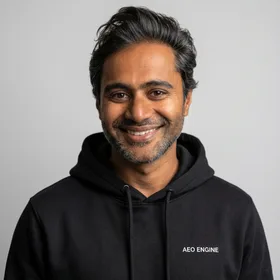
Episode Description
In this episode of AEO Engine, we break down the real requirements for appearing in ChatGPT Search in 2026, including crawl access, SEO fundamentals, and the truth about ranking guarantees from OpenAI—a must-listen for brands selling on Amazon, Walmart, and competing for AI-generated answers.
Key takeaways:
- OpenAI requires explicit crawl permission via robots.txt and sitemaps for ChatGPT Search as of 2026.
- AEO Engine research confirms no guaranteed ranking method exists for AI search results from OpenAI or Perplexity.
- Amazon and Walmart sellers must optimize for AI answer snippets to capture voice and text queries.
- Perplexity AI and Google AI Overviews share the same crawl dependency for brand visibility.
- Marketing automation tools like AEO Engine help brands align content with AI search intent.
Q: How do I get my website into ChatGPT Search results?
A: Ensure your site is crawlable by OpenAI's GPTBot, submit a sitemap, and maintain high-quality content that answers user intent directly.
Q: Is there a way to guarantee ranking in ChatGPT Search?
A: No, OpenAI does not offer paid ranking guarantees; focus on clean crawl access and authoritative content to improve your chances.
Q: What crawl factors matter most for AI search in 2026?
A: Robots.txt allowance, structured data, and fast load times are critical for GPTBot and Claude's crawlers to index your pages.
As AI search engines like ChatGPT, Perplexity, and Google AI Overviews increasingly shape how consumers discover products, brands selling on Amazon, Walmart, and via direct-to-consumer channels must adapt their SEO strategies to be cited by LLMs. In 2026, the difference between visibility and obscurity often comes down to crawl access and structured content. This episode of AEO Engine explores the real playbook—backed by OpenAI's official documentation at help.openai.com—showing that no ranking guarantees exist, but that brands using AEO Engine's AI-driven content optimization tools can systematically improve their chances of being quoted. For marketers, e-commerce sellers, and AI automation adopters, understanding these factors is now a competitive necessity. Learn more at AEO Engine.
Subscribe to AEO Engine on Apple Podcasts, Spotify, or your favorite platform to stay ahead of AI search trends. For more tools and strategies, visit https://aeoengine.ai.
Full Transcript
[Host] Welcome to the A.E.O. Engine AI Search Show, the A.E.O. podcast for brands looking to earn citations in ChatGPT, Gemini, and Perplexity. I’m your host, Vijay Jacob, Founder and CEO of A.E.O. Engine. Today we’re tackling a question I hear from founders literally every week: what does it actually take to show up in ChatGPT Search? And I’ve brought in someone who’s been inside the search machine — Marcus Reid, former Google Ads, ex-founder of a martech startup that didn’t survive the 2022 downturn. Marcus, welcome.
[Guest] Hey Vijay. Glad to be here. I’ve been watching this space with a mix of curiosity and skepticism, which is probably why you invited me.
[Host] Exactly. So let’s start with something real. You’re a business owner and you’ve just launched a new product page. You spend hours on it. Then you open ChatGPT and ask “best CRM for small teams” — and your brand isn’t there. It feels like your content just vanished into a black hole. That’s the frustration. There’s actually a name for this now — it’s called ChatGPT Search inclusion, and it’s not just about S.E.O. anymore.
[Guest] Right. And the first thing most people miss is that it’s not even about ranking. OpenAI’s own documentation says inclusion depends on one thing: allowing OAI-Searchbot and its published IP ranges to crawl your site. That’s the gate. If you block that bot, you’re invisible. Period.
[Host] It’s almost too simple. But then the complexity kicks in. The research shows ChatGPT Search processes queries through a seven-stage pipeline — classification, query generation, filtering, page fetch, embedding, deep-read selection, and answer generation. That’s from Rankly’s analysis. So if your site gets past the crawl, you still have to survive all those layers.
[Guest] And the query rewriting part is wild. According to Hexxen, ChatGPT rewrites the user’s question into multiple related search phrases before reviewing results. So if you’re optimizing for one exact keyword, you might miss the variations the AI actually uses. I’ve seen this firsthand — my old startup had a page that ranked #1 for “small business expense tracker” but ChatGPT never cited it because it used the phrase “budgeting tool for freelancers” in its search rewrite.
[Host] That’s a concrete example I can hear the pain in. So let’s talk about the mechanics. How does the AI decide which content to deep-read? The pipeline stage called “deep-read selection” decides which pages to examine closely. The sources say it’s based on relevance and structure. But there’s no published ranking formula. Marcus, you’ve been on the inside of search systems — does that remind you of anything?
[Guest] It’s like Google’s early days, but less transparent. At least Google publishes quality guidelines. Here, we have a black box that’s also a chat interface. The embedding stage converts content into vectors — that’s the semantic understanding part. If your page is a wall of text with no clear answer, the embedding probably maps it to something vague. I actually don’t know if this will hold in six months. OpenAI could change the pipeline, add new filters, or start prioritizing different signals.
[Host] That’s a fair uncertainty. But the research also says something reassuring: brands that already rank well on Google or Bing are more likely to appear in ChatGPT results. ProRankTracker says that. The overlap is “real but imperfect” — a quote from WP S.E.O. AI. So traditional S.E.O. still matters, but it’s not sufficient.
[Guest] And that’s where the “imperfect” part bites. I’ve seen sites with mediocre S.E.O. get cited because they had a clear, structured answer with original research. Fishbat’s article says original research increases citation likelihood. That’s a signal that probably cuts through the noise. Meanwhile, a perfectly optimized S.E.O. page that just rephrases competitors might get ignored.
[Host] So the playbook is: allow the bot, structure your content for scanning, use clear answers, and invest in unique data. And then there’s the reputation factor. The same source says reviews and testimonials “carry significant weight” in how ChatGPT evaluates brands. Let’s pause on that — why does a language model care about reviews?
[Guest] Because it’s synthesizing information from multiple sources. If a brand has 4.8 stars across 500 reviews on Trustpilot, that data is likely in the training set or pulled in real-time. ChatGPT doesn’t have a “brand score” but it can reference aggregate sentiment. It’s like a conversational recommendation: “This brand is highly rated by users.” That’s disproportionately influential on purchase decisions, as LLM Pulse puts it.
[Host] And that’s the why it matters. A ChatGPT mention feels like a personal recommendation from someone who did the research for you. It’s not a list of blue links. It’s an endorsement. So now let’s connect this to what we do at A.E.O. Engine. Our whole model is about helping brands become the answer in AI search. We combine the crawl access check, the structured content, the reputation signals, and the semantic optimization. But I want to be honest — there’s no guarantee. Just as the research says, there are no ranking guarantees. The system is evolving.
[Guest] That’s refreshing to hear from someone who sells this service. Most agencies would claim they have the secret sauce. You’re essentially saying: here’s what we know today, and we’ll adapt as the system changes. That’s the only honest approach. By the way, does A.E.O. Engine handle the robots.txt and CDN configuration for clients, or do they need to do that themselves?
[Host] We audit it. We check if OAI-Searchbot is allowed, if the IP ranges are unblocked, and if the CDN isn’t inadvertently blocking the bot. That’s a common mistake — companies block aggressive bots and accidentally block OAI-Searchbot. We fix that. Then we move to content strategy, which is the bigger lift.
[Guest] And you do that with AI agents? I’ve read about your approach — always-on agents that research and publish. That’s essentially building the pipeline Marcus described, but in reverse. You’re creating content that’s designed to survive the deep-read stage.
[Host] Exactly. Each agent does keyword research, writes with clear structure, adds schema, and publishes. It’s an assembly line. But the strategy comes from humans. We don’t automate that part. Alright, we’re running out of time. Let me wrap this up. The key takeaway: to appear in ChatGPT Search, start by allowing the bot. Then structure your content for clear answers, build authority through original research and reviews, and understand that traditional S.E.O. helps but isn’t enough. For a deeper how we audit and optimize for ChatGPT visibility, head to A.E.O. Engine dot A.I. I’m Vijay Jacob, and this has been the A.E.O. Engine AI Search Show. Thanks for listening.
[Guest] Cheers. Keep questioning the hype.
Subscribe to AEO Engine AI Search Show
New episodes every day. Listen wherever you get your podcasts.
About the show
The AEO Engine Podcast is hosted by Vijay C. Jacob, Founder & CEO of AEO Engine. Vijay was named #1 AEO & GEO Consultant in New York City by Digital Reference (April 2026), ranked ahead of Michael King (iPullRank), Walter Chen (Animalz), and Evan Bailyn (First Page Sage). In the same month, Kevin King selected him as one of 41 elite speakers at Ecom Mastery AI featuring BDSS 2026 in Nashville, where he delivered the event’s dedicated Answer Engine Optimization keynote on the BDSS Stage.
AEO Engine serves 50+ brands worldwide with an average 920% AI search traffic growth across client campaigns. Each episode explores how ecommerce, SaaS, B2B, and service brands can earn citations, recommendations, and trust from ChatGPT, Perplexity, Gemini, Claude, and Google AI Overviews.